
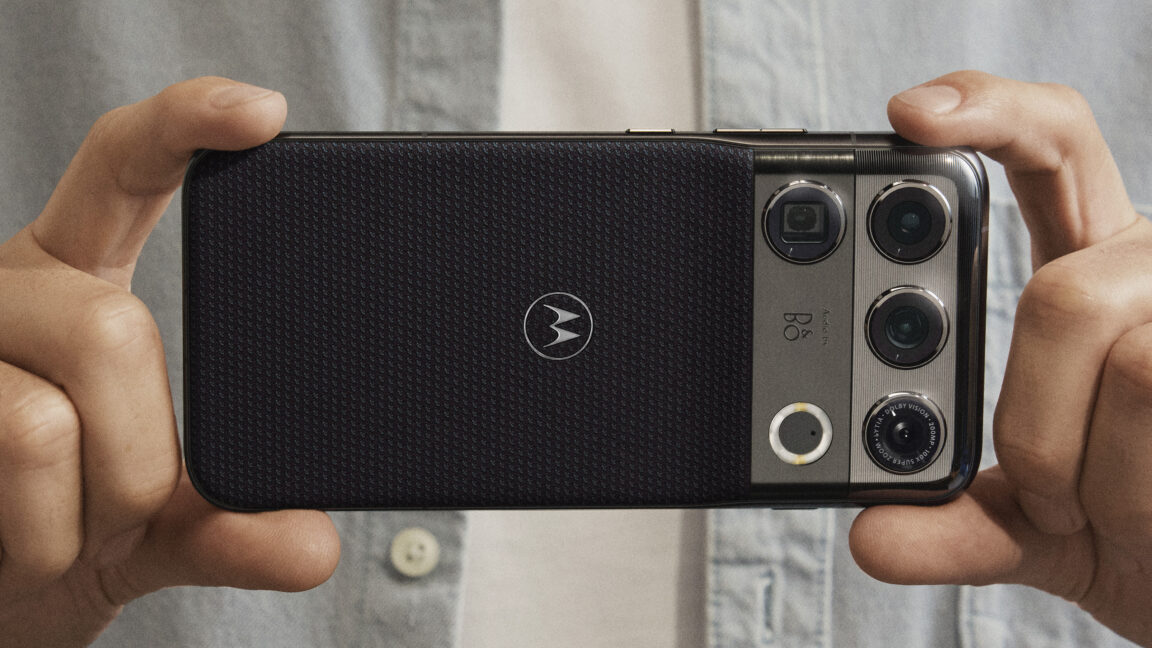
Motorola's new Signature 27 has it all if you can stomach the $1,600 price tag
It has all the bells and whistles (and cameras).
Aggregated from the world's leading technology publications — updated every 30 minutes.
Last updated Fri 6 Nov, 2:21 AM
It has all the bells and whistles (and cameras).
It has all the bells and whistles (and cameras).
It has all the bells and whistles (and cameras).
Potential Sciences, a startup backed by the UK government, is betting that training AI models on computer-generated biochemical data can speed up the plodding process of developing new drugs.
Equipped with the brightest display, an “Event-Based Vision Sensor,” and the next-generation Qualcomm processor, Motorola hopes you’ll want to spend big bucks on its ceramic and aluminum Signature 27.
Potential Sciences, a startup backed by the UK government, is betting that training AI models on computer-generated biochemical data can speed up the plodding process of developing new drugs.
Potential Sciences, a startup backed by the UK government, is betting that training AI models on computer-generated biochemical data can speed up the plodding process of developing new drugs.
Potential Sciences, a startup backed by the UK government, is betting that training AI models on computer-generated biochemical data can speed up the plodding process of developing new drugs.
Equipped with the brightest display, an “Event-Based Vision Sensor,” and the next-generation Qualcomm processor, Motorola hopes you’ll want to spend big bucks on its ceramic and aluminum Signature 27.
Potential Sciences, a startup backed by the UK government, is betting that training AI models on computer-generated biochemical data can speed up the plodding process of developing new drugs.
Equipped with the brightest display, an “Event-Based Vision Sensor,” and the next-generation Qualcomm processor, Motorola hopes you’ll want to spend big bucks on its ceramic and aluminum Signature 27.
Equipped with the brightest display, an “Event-Based Vision Sensor,” and the next-generation Qualcomm processor, Motorola hopes you’ll want to spend big bucks on its ceramic and aluminum Signature 27.